
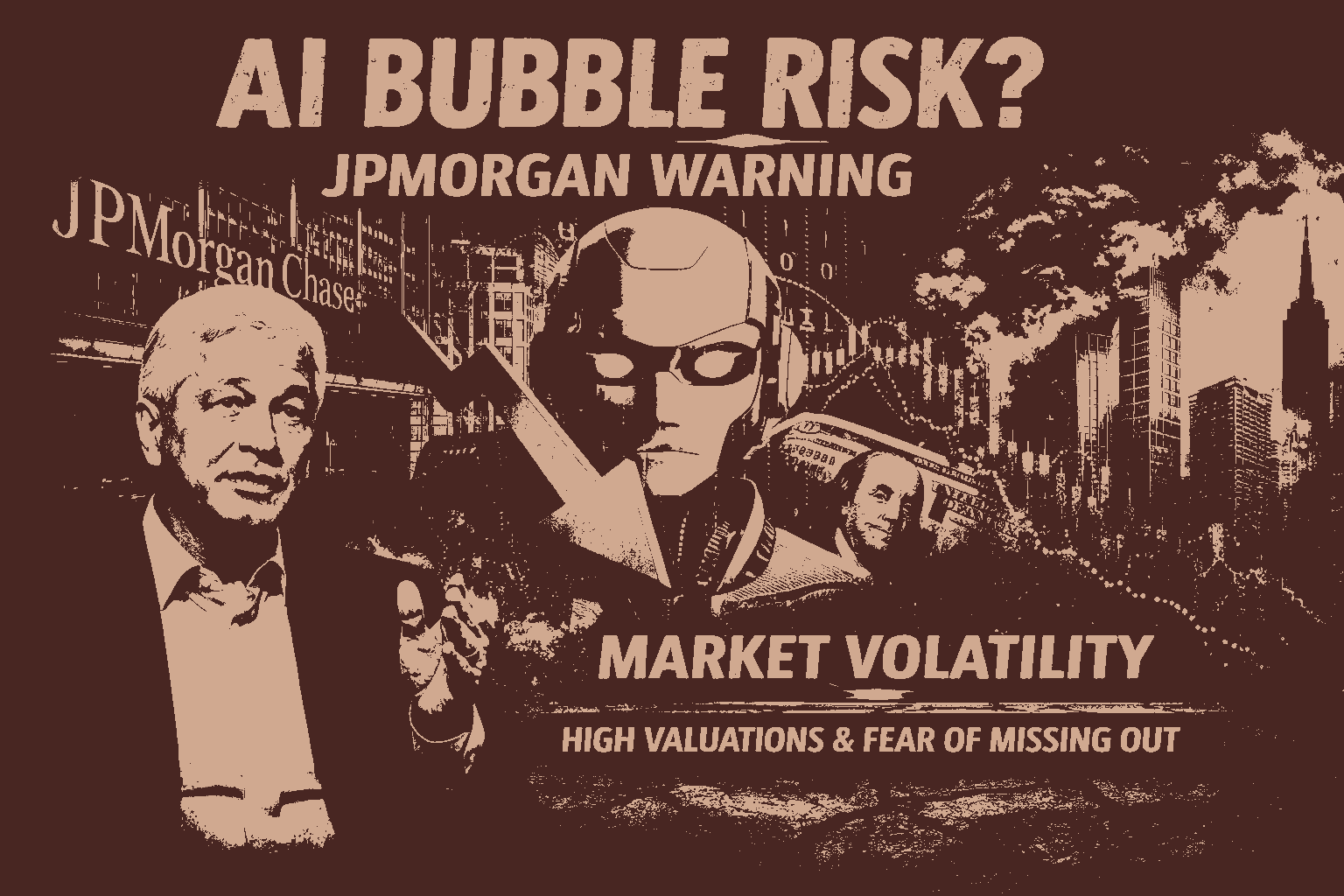
Stock Market Volatility Raises Concerns Among Investors
Global stock markets are witnessing significant volatility. Over the past year, struggling to sustain gains at higher levels. Several small- and mid-cap stocks have corrected by more than 50%, leaving investors under pressure.
JPMorgan CEO Flags Warning Signs
Amid this uncertain environment, CEO has expressed concerns that current market conditions resemble the period leading up to the 2008 financial crisis. According to Dimon, investor behavior is increasingly driven by greed rather than disciplined analysis. He cautioned that such sentiment-driven investing often creates systemic risks.
High Valuations Fuel Market Anxiety
One of the primary concerns is stretched valuations. Many companies are trading at prices far above their actual earnings performance. This suggests that expectations are extremely high, yet tangible results have not fully materialized. When market prices run ahead of fundamentals, the risk of sharp corrections increases.
FOMO Driving Risky Investment Decisions
Another factor amplifying market risk is FOMO — the “Fear of Missing Out.” Investors are pouring money into stocks simply to avoid being left behind. This herd mentality often leads to overpaying for assets, creating inflated price levels that may not be sustainable in the long term.
AI Boom: Innovation or Emerging Bubble?
The rapid rise of artificial intelligence has become a central theme in today’s market rally. AI-focused companies are attracting massive capital inflows. Recently, AI startup introduced new features for its Claude AI engine, triggering sharp movements in technology stocks. This reaction highlights how sensitive markets have become to AI-related news.
While artificial intelligence is undoubtedly transformative, history shows that every major technological boom carries the risk of forming a bubble. During the dot-com era, internet stocks soared to extraordinary levels before collapsing dramatically. The current AI enthusiasm shows signs of a similar pattern, where expectations may be running ahead of sustainable profitability.
Lessons from the 2008 Financial Crisis
Between 2005 and 2007, markets were buoyant, easy credit was widely available, and asset prices were climbing rapidly. Investor confidence was at record highs. However, in 2008, the bubble burst. Major financial institutions collapsed, stock markets crashed, and millions lost their jobs. Dimon suggests that elements of today’s market psychology echo that pre-crisis period.
He referenced the saying, “Rising tide lifts all boats,” meaning that in a bull market, nearly all assets rise together. However, such phases do not last forever. The difference today is that instead of real estate, technology and AI are at the center of speculation.
Are Investors Prepared for a Correction?
Dimon also warned that powerful structural shifts are underway in the software and technology sectors. These deep changes could create instability if not managed carefully. This is not necessarily a time for panic — but it is certainly not a time for blind investing either.
Markets will always offer opportunities. However, history has repeatedly shown that investors who ignore warning signs often suffer the most during downturns. The real question is not whether markets will correct, but whether investors are prepared if they do.
In today’s environment, disciplined strategy, risk management, and realistic expectations may matter more than ever.