
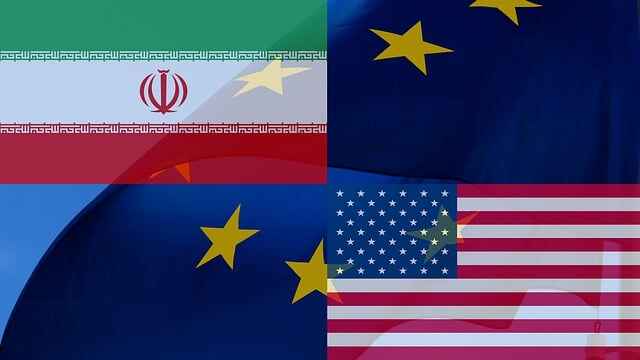
Speculation about possible US military action against Iran has intensified ahead of a new round of nuclear negotiations scheduled for February 26 in Geneva. As diplomatic efforts resume, questions are being raised about whether Tehran is concerned about Washington’s next move.
The upcoming meeting will bring representatives from both countries together once again, with Oman continuing its role as mediator. Omani Foreign Minister Badr Albusaidi confirmed that indirect discussions regarding Iran’s nuclear program had previously taken place in Oman, followed by a recent round of talks in Geneva last week.
Tensions have grown alongside reports of an increased US military presence in the Middle East. According to various sources, fighter jets and aerial refueling tankers have been deployed to the region. The United States has also positioned aircraft carriers, cruisers, and submarines nearby. Some reports citing Pentagon sources suggest that military action could begin by the end of the week if diplomatic efforts collapse.
These developments have fueled speculation that Washington is preparing contingency plans in case negotiations fail.
President Donald Trump has expressed frustration that despite mounting military pressure and political measures, Iran has not agreed to halt its nuclear program. The US administration maintains that Iran must not possess nuclear weapons or the capability to develop them. Washington has also stated that uranium enrichment should not continue under any circumstances.
Trump has warned that limited military strikes could be considered if diplomatic efforts do not yield results.
Iranian President Masoud Pezeshkian has stated on social media that Iran remains committed to regional peace and stability. He indicated that recent discussions involved practical proposals and that encouraging signs had emerged. However, he also emphasized that Tehran is closely monitoring US military movements and is prepared for all possible scenarios.
Iran’s Foreign Minister Abbas Araghchi confirmed that he expects to meet US Special Envoy Steve Witkoff in Geneva on February 26. According to Araghchi, a draft framework for a potential agreement could be shared in the coming days. He added that there is still a viable opportunity for a diplomatic resolution to the nuclear issue.
Iran insists that negotiations should focus strictly on its nuclear program. Meanwhile, the United States and Israel want broader discussions that include Iran’s missile program and its support for armed groups in the region.
Tehran continues to assert that its nuclear program is entirely peaceful and that it has the right to enrich uranium for civilian purposes. Iranian officials argue that recent discussions have not included any US demand for a complete halt to uranium enrichment. Instead, talks have reportedly centered on ensuring that Iran’s nuclear activities remain exclusively peaceful. In return, sanctions relief may be considered.
While both sides have signaled that diplomacy remains possible, the atmosphere is marked by mistrust and heightened military readiness. If the Geneva talks fail to produce progress, the risk of further escalation in the region cannot be ruled out.
For now, the international community watches closely as Washington and Tehran prepare for what could be a decisive round of negotiations.